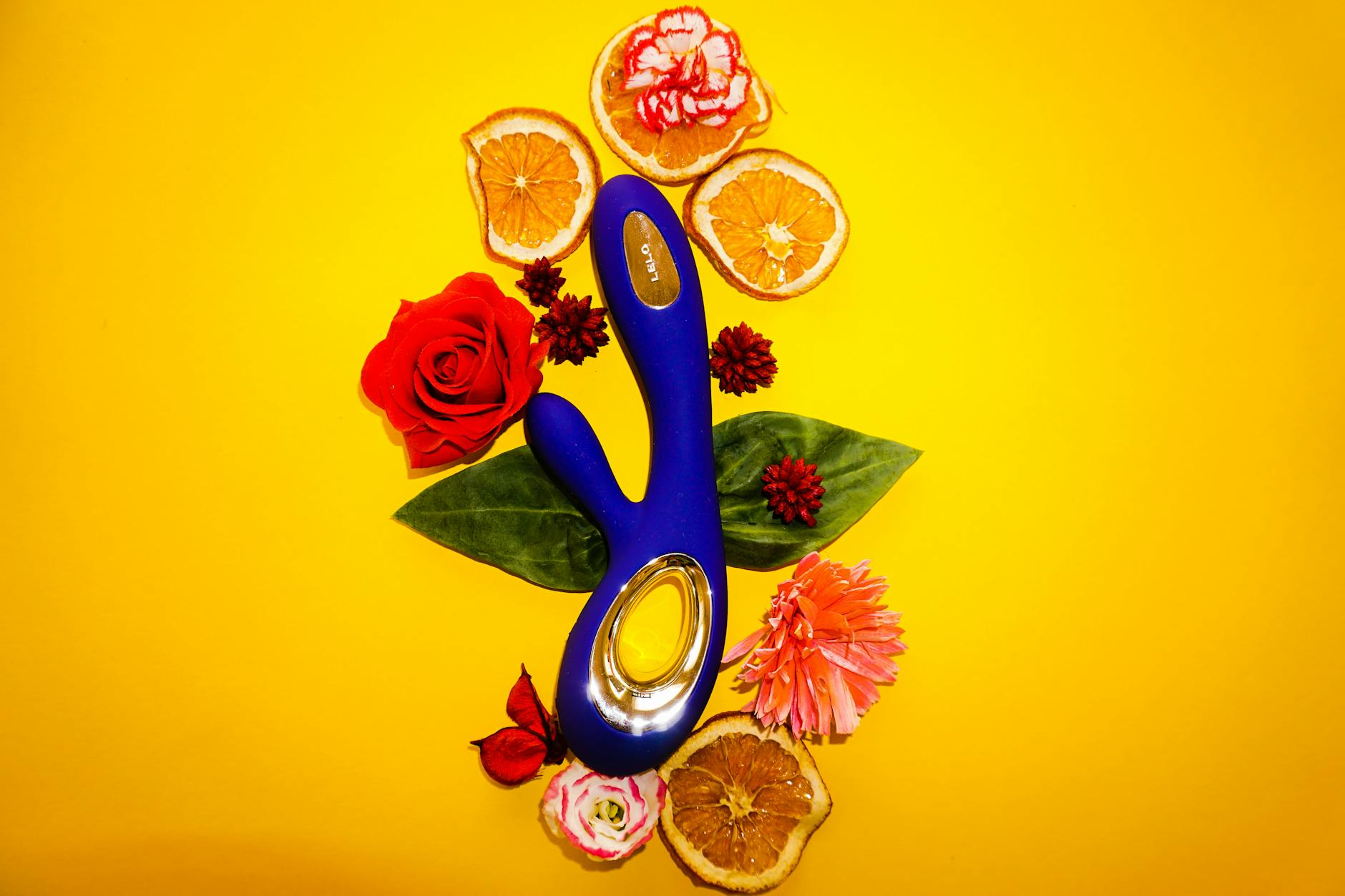
Here's what nobody tells you about solo exploration
Let's be real. Most people learn about their own pleasure in fragments. A partner tells you what works for them. Movies suggest what should work. Your body has its own agenda entirely. Solo exploration, especially with tools like lemon vibrators, is where those three conversations finally start making sense.
This is not about "practice" before the "real thing." Solo sex is the real thing. It's where you own your pleasure, learn your body's language, and build the kind of sexual confidence that changes every other experience you have.
Why solo comes first (and why it matters)
Here's the thing I see in my therapy practice constantly: people who skip solo exploration and jump straight to partnered sex spend years trying to figure out what they like based on someone else's feedback. That's backwards.
When you explore alone first, you're building a map of your own body. You learn what pressure feels good, what rhythm makes sense, how your arousal actually builds. You discover whether you like consistent stimulation or variation. You learn the difference between what feels nice and what actually gets you to orgasm.
Then, when a partner is in the picture, you're not starting from zero. You know what works. You can communicate it. You can guide someone toward your pleasure instead of hoping they guess right.
Photo by FounderTips . on Pexels
Why lemon vibrators work for solo discovery
Lemon vibrators, especially designs like the Lem, are almost weirdly perfect for solo exploration. Here's why.
They use air-suction technology rather than traditional vibration. That means the stimulation is different from your fingers or a partner's touch, but not so alien that it feels disconnected from your body. You're building new pathways of sensation without overwhelming yourself.
The learning curve is gentle. Start on lower patterns and work up. There's no pressure to perform, no audience, no "is this working for you" conversation. You can stay with a pattern for 20 minutes if that's what feels right, or switch it up constantly. It's entirely your rhythm.
Lemon clitoral vibrators are also discreet and built for solo use. They're not designed around partnered penetration or accommodation. They're designed for clitoral pleasure, solo exploration, and learning what actually works for your body.
The three-phase solo exploration map
Phase one: Getting comfortable with the device itself (week one, roughly)
Unpack it. Charge it. Read the basics. Spend a few sessions just holding it, running it over your arm, your thighs, places that feel lower-stakes. There's zero pressure to "use" it the way it's intended. You're just learning how it feels in your hands.
Then, when you're ready, try the lowest pattern on your clitoris. Just for 30 seconds. Notice what happens. Does it feel good? Too intense? Not intense enough? All of that is valuable information.
Phase two: Finding your pattern (weeks two through four)
Now you're experimenting with intentionality. Spend time with pattern one. Really spend time. Five, ten, fifteen minutes. Notice if your body starts craving more intensity, or if it asks for something different.
Move through the patterns slowly. This is not a race to orgasm. The point is to map what exists in your nervous system, not to chase a particular outcome.
Many people discover they have a preferred pattern, but it's not always the highest intensity. Sometimes it's pattern three, sometimes it's pattern two. There's no "right" preference. There's only what works for your body.
Phase three: Building your own rhythm (weeks four onward)
By now you're starting to understand how your arousal builds. Maybe you need twenty minutes of warm-up before intensity feels good. Maybe you like to change patterns mid-session. Maybe you like to bring yourself close and then back off, over and over.
This is where you stop following the instruction manual and start writing your own script. You're learning your pleasure signature, the specific sequence and intensity that gets you to satisfaction.
What you'll actually learn (and it's more than you think)
Take notes if it helps. Not clinical notes. Just little observations. "Pattern two, 15 minutes, then pattern four felt incredible." "Tried lube this time and it changed everything." "Didn't want to go past pattern three today."
Over weeks, you're building evidence. You'll discover that your pleasure changes with your cycle if you menstruate. You'll notice that stress affects your arousal. You'll learn whether you need mental space, music, a specific time of day, or presence to get into it.
You'll also learn the difference between pleasure that's purely physical and pleasure that needs emotional space. Some days your body wants sensation. Some days you want to feel connected to something deeper. Solo exploration lets you honor both.
The confidence part nobody mentions
Here's what shifts when you've spent real time exploring solo with tools like lemon vibrators: you stop being confused. You stop wondering if something's wrong with you because you don't orgasm the way your friends described. You stop performing pleasure for an imaginary audience.
You know what works. And knowing is half of everything.
That confidence bleeds into everything else. When you do involve a partner, you can say "I like this" with real certainty. You can guide them. You can ask for what you want. You're not guessing.
Practical stuff that actually helps
Timing: Pick a time when you're genuinely interested in pleasure, not just "I should do this." Early morning or late evening, whenever your body feels present.
Environment: Locked door, phone elsewhere, enough time that you're not rushing. Even 20 minutes of uninterrupted time is enough.
Lube: Water-based lube changes the experience. It's not essential, but it often shifts things from "nice" to "wow."
No agenda: This matters. If you go in thinking "I need to have an orgasm," you've turned it into a performance. Go in thinking "I'm exploring what feels good." Permission is the whole game.
When to bring a partner in (if you want to)
There's no timeline. Some people solo explore for a few months. Some for years. Some people don't want a partner involved and that's completely valid.
If you do eventually want to involve someone, solo exploration gives you the vocabulary to explain what works. "I like pattern three for 10 minutes, then I usually switch to pattern four." "I need about 20 minutes to warm up." "I prefer consistent pressure, not variety."
That's not restrictive for a partner. It's actually liberating. They know exactly what to aim for.
You might also discover that solo exploration and partnered sex feel completely different, and both are valid. Some people find lemon vibrators work wonderfully alone but prefer different kinds of stimulation with a partner. That's information, not failure.
FAQ: Solo exploration and lemon vibrators
Is it normal to need a lot of time to explore before having partnered sex?
Absolutely. There's no timeline. Some people need months. Some need years. The point is that you're building confidence and knowledge, not checking a box on a sexual development chart. Take the time your body actually needs.
Will using lemon vibrators alone make partnered sex feel less satisfying?
No. If anything, the opposite. When you know what works for you, you can communicate it to a partner and actually guide the experience. You're not left hoping they stumble onto the right rhythm. And understanding your own pleasure often deepens what you can experience with someone else.
What if I feel awkward or embarrassed exploring solo?
That's incredibly common, and it usually shifts with time and repetition. You're learning to prioritize your own pleasure in a world that's taught you to prioritize everyone else's. That's going to feel strange at first. It gets easier. And there's nobody watching. You're allowed to feel awkward in private while you're learning.
Can I explore with a partner present but not involved?
Yes, if that feels right to you. Some couples enjoy that kind of presence. Some people find it too vulnerable. Listen to what feels genuinely comfortable, not what you think you "should" do. If you're checking boxes on someone else's fantasy rather than exploring your own pleasure, you've missed the point.
Should I use the highest pattern right away?
No. Start low. Your sensitivity is often highest when you've barely explored, and jumping to intense stimulation can overwhelm your nervous system. Build gradually. There's no prize for using the highest pattern. There's only what feels good to your body right now.
How do I know if I'm exploring "correctly"?
If it feels good and you're not hurting yourself, you're doing it correctly. There's no script. Your body is not a math problem with a right answer. It's a living system that changes. Honor what it's telling you.
The bigger picture
Solo exploration is not foreplay. It's not a stepping stone to "real" sex with a partner. It's a complete sexual experience in itself, and it's where you learn who you are as a sexual being.
When you use lemon vibrators to explore alone, you're building knowledge, confidence, and a real relationship with your own pleasure. That's the foundation that changes everything else.
If you're curious about how to navigate this conversation once partnered sex enters the picture, read about <a href="/blog/how-to-use-lemon-vibrators-when-partners-want-different-kinds-of-stimulation">how to use lemon vibrators when partners want different kinds of stimulation</a>. Or if you're thinking about whether to bring a device into a relationship you're already in, <a href="/blog/how-to-use-lemon-vibrators-when-your-partner-wants-to-try-them-together">using lemon vibrators together as a couple</a> covers how to start that conversation.
Your pleasure matters. Not as a bonus. Not as foreplay. As the main event. Solo exploration with lemon vibrators is one of the clearest ways to prove that to yourself.